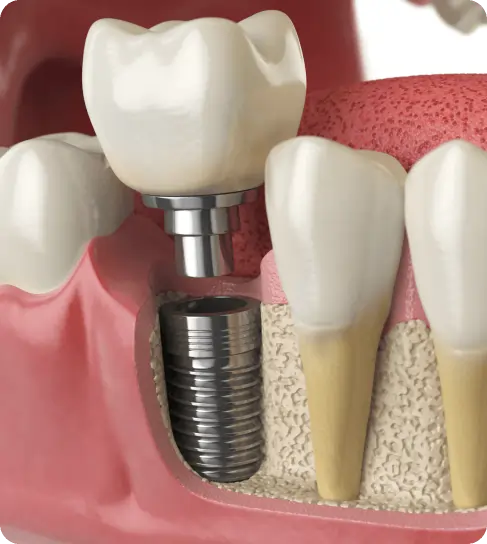


Dental implants are small titanium posts surgically placed into the jawbone to act as artificial tooth roots. Once healed, they support crowns, bridges, or full-arch restorations to replace one or multiple missing teeth.
What to Expect During the Implant Surgical Procedure
The dental implant surgical procedure is planned carefully before the treatment day. Your dentist first reviews your oral health, bone support, bite, and dental images to decide the safest placement position. This helps make the treatment more accurate and suitable for your mouth.
During the procedure, the area is numbed to help keep you comfortable. The implant is then placed into the jawbone, where it works like an artificial tooth root. This implant will later support a dental crown, bridge, or full-arch restoration, depending on your treatment plan.
After placement, the implant needs time to heal and connect with the surrounding bone. Your dentist will give you aftercare instructions and schedule follow-up visits to check your healing before the final replacement tooth is attached.
Dental Implants for Full-Arch Tooth Replacement
All-on-4 dental implants are a permanent solution to replace a full arch of missing or failing teeth with a fixed implant-supported restoration. Instead of replacing each tooth with a separate implant, this treatment uses a planned number of implants to support a complete set of replacement teeth.
This full implant solution can help improve chewing strength, smile appearance, and daily comfort compared to loose dentures. It may be suitable for patients who have lost most of their teeth, have badly damaged teeth, or want a more stable long term solution.
Patients replacing one or more missing teeth may compare implants with dental bridges in Hamilton.
Implant-Supported Overdentures for Better Stability
Implant-supported overdentures are for those patients who want more stability than traditional removable dentures. Instead of resting only on the gums, the denture connects to dental implants for a firmer hold during chewing, speaking, and smiling.
This treatment can help reduce denture movement, improve daily comfort, and give patients more confidence while eating or talking. It is often a practical choice for people who are not ready for fixed full-mouth implants but still want stronger support than regular dentures.
- Better denture stability during daily activities
- Less slipping compared to traditional dentures
- Improved chewing comfort for everyday meals
- More confidence when speaking or smiling
- Gentler support for the gums
- Custom planning based on bite, bone, and smile needs
Bone Grafting for Stronger Implant Support
Bone grafting helps create a stronger foundation when the jawbone does not have enough volume to support a dental implant. Tooth loss, gum disease, or long-term denture use can cause bone shrinkage over time, making implant placement more difficult.
A bone graft adds support to the area where the implant will be placed. This can help improve implant stability and prepare the mouth for a safer, more predictable treatment plan.
Before recommending bone grafting, your dentist will review your dental exam, X-rays, and bone condition to decide whether extra support is needed before implant placement.
- Strengthens weak jawbone before implant treatment
- Improves implant support for better stability
- Helps after bone loss from missing teeth
- Creates a stronger foundation for long-term function
- Planned with dental imaging for accurate treatment
- Recommended only when needed after a dental assessment