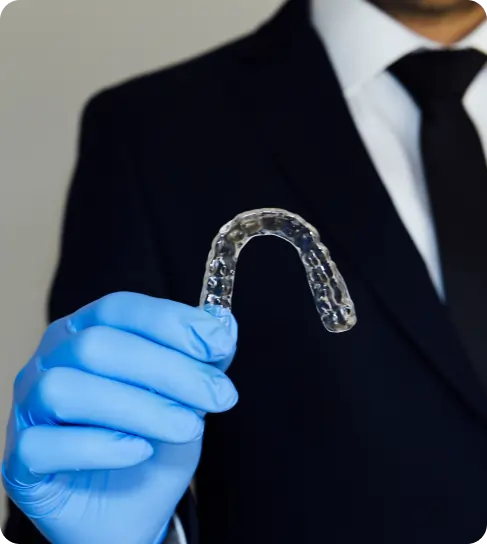


Bruxism is the involuntary grinding or clenching of your teeth. It can happen while you sleep and may contribute to tooth wear, sensitivity, jaw discomfort, headaches, and damage to dental restorations.
Some people grind their teeth without knowing it. Your dentist can look for signs of bruxism during a dental examination.
How Does a Night Guard Help?
A night guard creates a protective barrier between your upper and lower teeth. It helps reduce direct tooth-to-tooth contact during grinding and clenching and can protect against excessive tooth wear.
A night guard may be recommended if you have:
- Teeth grinding or clenching
- Worn or flattened teeth
- Tooth sensitivity
- Jaw soreness or tightness
- Morning jaw discomfort
- Signs of excessive tooth wear
A night guard protects your teeth but does not necessarily stop the underlying cause of bruxism.
Custom Night Guards for Teeth Grinding
A custom night guard is made to fit your individual teeth and bite. The appropriate design depends on factors such as your grinding habits, bite, dental condition, and symptoms. A properly fitted appliance should stay securely in place and feel comfortable while you sleep.
Types of Night Guards
Night guards can vary in material, thickness, and design. Common options include:
Soft Night Guards
Soft guards are flexible and may be suitable for some patients with lighter grinding or clenching.
Hard Night Guards
Hard guards are more rigid and may be recommended when greater durability or specific bite considerations are needed.
Dual-Layer Night Guards
Dual-layer guards combine different materials to provide a balance of comfort and durability.
The best night guard depends on your individual dental needs. Your dentist can assess your bite and symptoms before recommending an appliance.
How Is a Custom Night Guard Made?
Getting a custom teeth night guard is straightforward:
- Dental assessment – We examine your teeth, bite, and signs of bruxism.
- Impression or digital scan – Your teeth are accurately recorded.
- Custom fabrication – Your appliance is created to fit your mouth.
- Fit and adjustment – We check the appliance and make adjustments when needed.
Can a Night Guard Help with TMJ Symptoms?
A night guard may help some patients with TMJ symptoms related to teeth grinding or jaw clenching. It creates a protective barrier between teeth during sleep, helping reduce excessive contact and tooth wear. A dental assessment can determine whether a custom TMJ mouth guard is appropriate for your symptoms.
Protection From Jaw Clenching
A night guard for jaw clenching creates a protective barrier between the teeth during sleep. It can help reduce the effects of repeated clenching and protect your teeth from excessive wear.
If you regularly wake with jaw soreness, tightness, or tooth sensitivity, speak with your dentist about your symptoms.
How Long Should You Wear a Mouth Guard for TMJ?
How long you should wear a mouth guard for TMJ depends on your symptoms and your dentist recommendations. If it is prescribed for nighttime grinding or clenching, it is generally worn while sleeping.
Your dentist can advise you on how frequently to use the appliance and monitor its fit and effectiveness during follow-up visits.
How to clean night guard at home?
Clean your night guard after each use by rinsing it with cool water and gently brushing it with a soft toothbrush and mild soap. Allow it to air-dry completely before storing it in a ventilated case. Avoid hot water, which can warp the appliance.