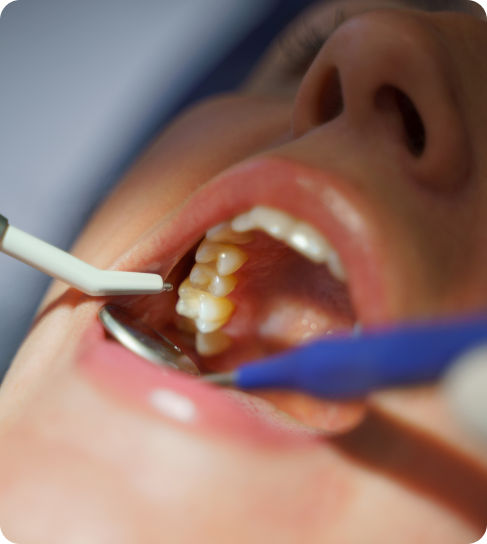


Scaling and root planing is a non-surgical treatment commonly used for periodontitis. Scaling removes plaque and hardened tartar from the teeth, including buildup below the gumline. Root planing cleans and smooths the tooth roots, helping the gums heal around the teeth.
When Is Deep Cleaning Needed?
Your dentist may recommend scaling and root planings when an examination shows signs of gum disease, including:
- Bleeding gums
- Swollen gums
- Gum recession
- Persistent bad breath
- Tartar below the gumline
- Deep periodontal pockets
- Bone loss around teeth
A dental examination is needed to determine whether a regular cleaning is enough.
Scaling and Root Planing vs. Regular Cleaning
A regular dental cleaning mainly removes plaque and tartar from areas around and above the gumline. Scaling and root planing reaches deeper below the gums to treat periodontal disease and clean the tooth roots.
Routine teeth cleaning in hamilton focuses mainly on plaque and tartar above and around the gumline.
What Happens During Scaling and Root Planing?
Your dentist or dental hygienist removes plaque and tartar using dental instruments. The tooth roots are then carefully cleaned and smoothed. Local anesthesia may be used to numb the treatment area. Depending on the amount of gum disease present, treatment may be completed in one visit or divided between appointments.
Benefits of Scaling and Root Planing
Scaling and root planings can help improve gum health by:
- Removing plaque and tartar below the gums
- Reducing gum swelling and bleeding
- Helping control gum disease
- Reducing deep gum pockets
- Supporting healthier gums around your teeth
- Helping prevent further gum problems
Your results depend on your gum condition and how well you maintain your oral care after treatment.
After Scaling and Root Planing
Your gums may feel sore, and your teeth may feel sensitive after treatment. This is usually temporary.
Continue brushing and flossing as recommended by your dental team. Follow-up visits may be needed to check your gum health and monitor healing.
Some patients may need regular gum maintenance to keep gum disease under control.
Is Scaling and Root Planings Painful?
The area can be numbed during treatment to help keep you comfortable. You may feel mild soreness or sensitivity afterward, but it usually improves within a few days.