
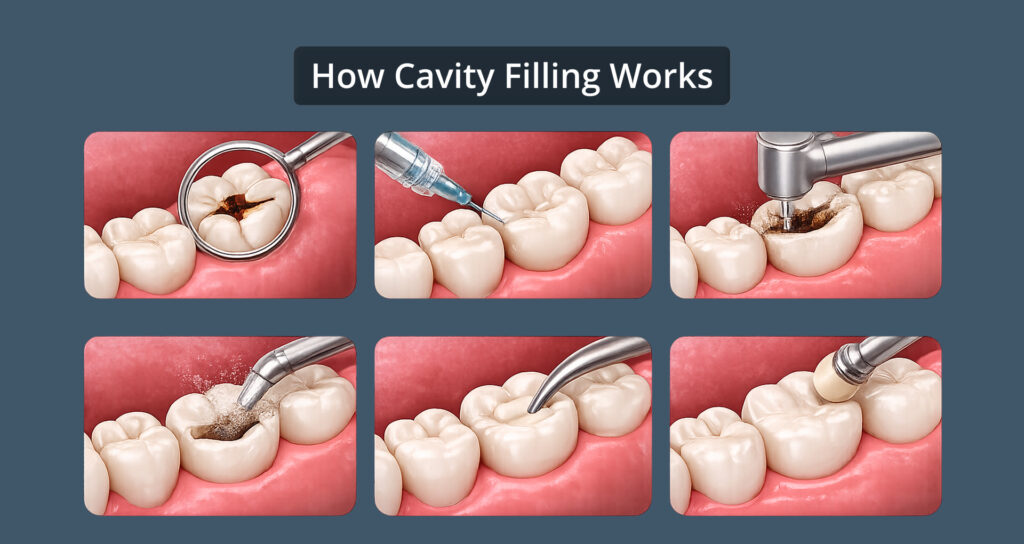
A cavity filling repairs a tooth damaged by decay. The dentist removes the decayed area, cleans the tooth, and restores it with a filling material. Most simple cavity fillings can be completed in one dental visit.
What Is a Cavity Filling?
A dental cavity is permanent damage caused by tooth decay. Bacteria and acids gradually weaken the enamel and can create a small hole in the tooth.
Once a cavity has formed, it cannot be removed at home. A dentist needs to examine the tooth and determine whether a tooth filling is the right treatment.

What Does a Dental Cavity Look Like?
A cavity may appear as a white, brown, or dark spot, a small pit, or a visible hole. However, cavities between teeth or around existing fillings may not be easy to see.
Other signs can include tooth sensitivity, pain when chewing, or food repeatedly getting stuck around one tooth. Some early cavities cause no symptoms and are found during a dental exam or X-ray.
How Does a Cavity Filling Work?
A cavity filling removes decay and restores the damaged part of the tooth. The procedure usually includes:
- Examining the tooth and taking an X-ray if needed.
- Numbing the treatment area.
- Removing the decayed tooth structure.
- Cleaning and preparing the cavity.
- Placing and shaping the filling.
- Checking and adjusting your bite.
For composite fillings, the material is hardened using a dental curing light.

How Long Does It Take to Fill a Cavity?
A simple cavity filling often takes about 20 to 60 minutes. Treatment time depends on the size and location of the cavity, the filling material, and the number of teeth being treated.
Larger or deeper cavities may require more time. Your dentist can give you a better estimate after examining the tooth.
Does a Cavity Filling Hurt?
The tooth is usually numbed with local anesthetic before treatment, which helps keep the procedure comfortable. You may feel pressure or vibration while the dentist removes decay and places the filling.
Mild sensitivity after treatment can occur and often improves with time. Contact your dentist if pain becomes severe or continues to worsen.
What Types of Cavity Fillings Are Available?
Different filling materials are available depending on the tooth, cavity size, chewing pressure, appearance, and treatment needs.
White Composite Fillings
Composite resin is tooth coloured and can closely match natural teeth. It is commonly used on both front and back teeth when appearance is important.
Silver Amalgam Fillings
Amalgam fillings are silver-coloured and have traditionally been used for their strength and durability. They are more noticeable than composite fillings and may be suitable in certain situations.
Other options can include glass ionomer and ceramic materials. Your dentist can recommend a filling based on the condition of your tooth.
White Fillings vs. Silver Fillings
White composite fillings blend more naturally with the surrounding teeth, while silver amalgam fillings are more visible. Both materials have different advantages depending on where and how they are used.
Your dentist may consider the cavity size, tooth location, chewing pressure, remaining tooth structure, and appearance when recommending a filling material.
When Is a Filling Not Enough?
A filling may not be suitable if decay has reached deep inside the tooth or too much healthy tooth structure has been lost.
If the dental pulp becomes affected, root canal treatment may be needed. Larger areas of damage may also require a crown or another restoration instead of a simple filling.
How Long After a Cavity Filling Can You Eat?
It is usually best to wait until the numbness has worn off before chewing. This helps prevent accidentally biting your cheek, lip, or tongue.
Once the numbness is gone, eat carefully and avoid very hard foods if the treated tooth feels sensitive. Follow any specific instructions given by your dentist.
Cavity Filling Aftercare
Most people can return to their normal routine soon after a filling. Mild sensitivity to cold, heat, or pressure may occur for a short period.
Brush twice daily with fluoride toothpaste, clean between your teeth every day, and avoid biting very hard objects. Regular dental exams also help monitor the filling and surrounding tooth.
When Does a Cavity Filling Need Replacement?
Fillings can wear, crack, loosen, or break over time. New decay can also develop around or underneath an existing filling.
Signs may include new sensitivity, pain when biting, food getting trapped, rough edges, cracks, or a loose filling. A dentist can determine whether the filling needs repair or replacement.
Does Dental Insurance Cover Cavity Fillings?
Many dental insurance plans provide some coverage for cavity fillings, but coverage varies by policy. The amount may depend on the filling material, tooth being treated, deductible, and plan limits.
Eligible patients may also receive coverage for certain restorative treatments through the Canadian Dental Care Plan (CDCP). Always check your individual coverage before treatment.
When Should You See a Dentist for a Cavity?
See a dentist if you notice a hole or dark area in a tooth, persistent sensitivity, pain when chewing, or an ongoing toothache. Remember that some early cavities may not cause pain.
At Main Street Dental Office in Hamilton, our dental team can examine the affected tooth and determine whether a cavity filling or another treatment is appropriate. Seek prompt dental care for severe pain, facial swelling, fever, or signs of infection.