
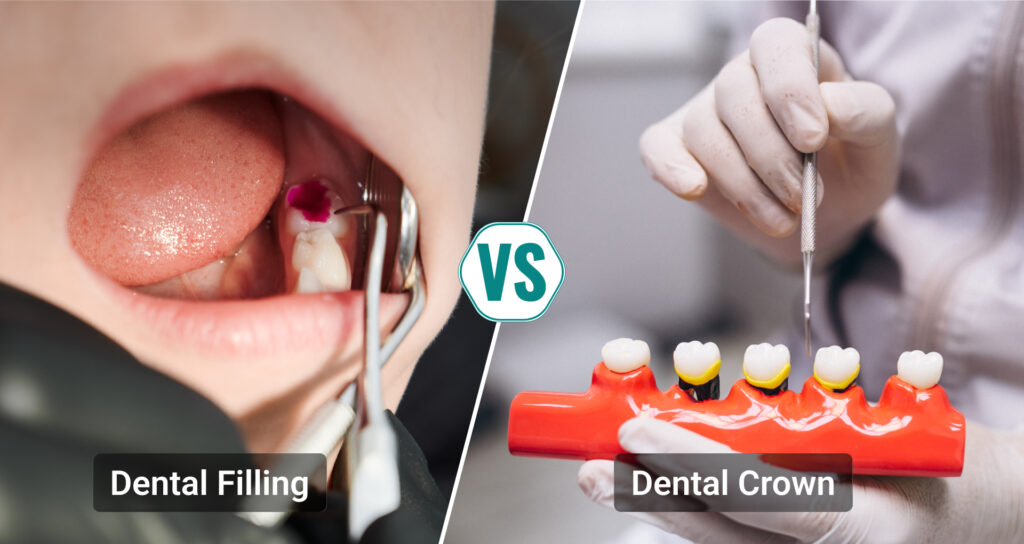
When a tooth is damaged or has a cavity, your dentist may recommend a dental filling or a dental crown. Many patients are unsure which option is better. The truth is, both treatments serve different purposes, and the right choice depends on the condition of your tooth.
What Is Dental Filling?
A dental filling is used to repair small to moderate tooth damage, most commonly caused by cavities.
During the procedure, the dentist removes the decayed part of the tooth and fills the space with a material such as composite resin (tooth-colored), amalgam, or ceramic.
When is a filling recommended?
- Small to medium cavities
- Minor tooth damage or wear
- Early-stage decay
- When most of the natural tooth is still strong
Fillings are a simple and quick solution that helps restore the tooth’s shape and function.
What Is a Dental Crown?
A dental crown is a cap that covers the entire tooth. It is used when the tooth is too damaged or weak to support a filling.
Crowns are made from materials like ceramic, porcelain, metal, or a combination, and they are designed to look and function like a natural tooth.
When is a crown recommended?
- Large cavities that weaken the tooth
- Cracked, broken, or worn teeth
- After a root canal treatment
- To protect a weak tooth from further damage
A crown provides full coverage and strength, making it a more durable solution for serious dental problems.
Key Differences Between a Crown and a Filling
Understanding the differences helps you see why one option may be better than the other.
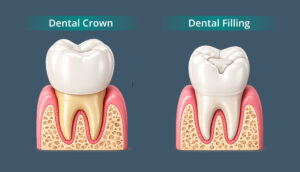
1. Size of Damage
- Filling: Used for small areas of decay
- Crown: Covers the entire tooth for major damage
2. Strength and Protection
- Filling: Restores basic function
- Crown: Adds strong support and prevents further damage
3. Durability
- Fillings: Typically last 5–10 years
- Crowns: Can last 10–15 years or longer with proper care
4. Procedure Time
- Filling: Usually completed in one visit
- Crown: May require two visits or a custom fitting
5. Cost
- Fillings: More affordable
- Crowns: Higher cost due to materials and lab work
How Dentists Decide: Crown or Filling?
Dentists do not choose randomly. The decision is based on clinical factors, not preference.
1. Amount of Tooth Structure Left
If most of the tooth is intact, a filling is enough.
If a large portion is damaged, a crown is needed for support.
2. Location of the Tooth
Back teeth (molars) handle more pressure. If damage is on a molar, a crown is often the better option.
3. Risk of Fracture
If the tooth is weak or cracked, a filling may fail. A crown protects the tooth from breaking.
4. Previous Dental Work
If a tooth already has multiple fillings, replacing them with a crown may be more reliable.
When a Dental Filling Is Enough to Restore Your Tooth
A filling works well when:

- The cavity is small
- The tooth structure is strong
- There is no cracking or weakness
- It is an early-stage issue
In these cases, a filling is less invasive, faster, and cost-effective.
When You Need a Crown Instead
A crown is the better choice when:
- The cavity is large
- The tooth is cracked or worn
- There is a risk of breaking
- After a root canal
Trying to use a filling in these cases can lead to failure or further damage, which may cost more in the long run.
Pros and Cons of Fillings
Advantages:
- Quick procedure
- Lower cost
- Preserves more natural tooth
Limitations:
- Not suitable for large damage
- Can wear out over time
- Less strength compared to crowns
Pros and Cons of Crowns
Advantages:
- Strong and durable
- Covers and protects the entire tooth
- Long-lasting solution
Limitations:
- Higher cost
- Requires more preparation
- May take more than one visit
Which Option Lasts Longer?
Crowns generally last longer because they protect the whole tooth, not just a small area.
However, longevity also depends on:
- Oral hygiene
- Eating habits
- Grinding or clenching
- Regular dental check-ups
A well-maintained filling can still last many years, but it is not designed for heavy damage.
Does the Procedure Hurt?
Both treatments are done with local anesthesia, so you should not feel pain during the procedure.
- Fillings are usually quick and straightforward
- Crowns may involve more steps, but discomfort is still minimal
After the procedure, mild sensitivity may occur but usually goes away in a few days.
Can a Filling Turn Into a Crown Later?
Yes. This is common. If a filling becomes too large or the tooth weakens over time, your dentist may recommend replacing it with a crown. This is why early treatment matters. Addressing problems early can help you avoid more complex procedures later.