
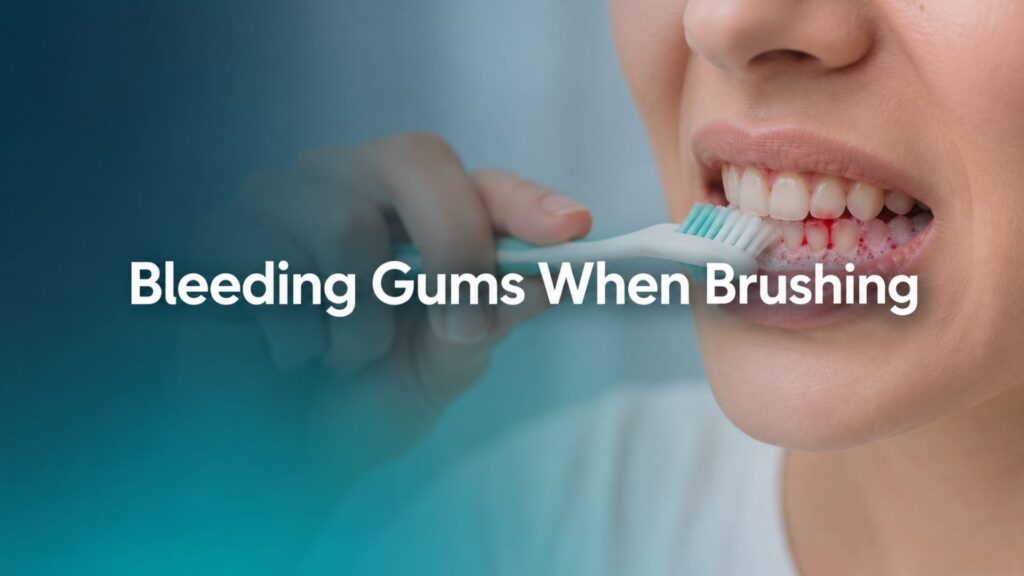
Seeing blood on your toothbrush may seem minor, but bleeding gums when brushing can be a sign of gum irritation or early gingivitis. Plaque buildup around the gumline can cause inflammation in gums, making them red, swollen, tender, and more likely to bleed.
Other factors, including brushing too hard, medications, hormonal changes, diabetes, and smoking, may also contribute. If the bleeding keeps returning, it is worth finding the cause rather than ignoring it.
Why Do Gums Bleed When You Brush Your Teeth?
Healthy gums should generally tolerate normal brushing without regularly bleeding. When plaque stays along the gumline, bacteria can irritate the gums and cause inflammation, making the tissue more sensitive to brushing or flossing.
If plaque is not removed, it can harden into tartar, which cannot be cleaned away with normal brushing at home. This is why your teeth may look healthy even when the gums around them are irritated.
If you notice what seems like teeth bleeding when brushing, the blood is usually coming from the gum tissue around or between the teeth, not from the tooth itself. Occasional irritation may settle quickly, but regular gums bleeding when brushing should not be ignored.

Common Causes of Bleeding Gums
There is no single cause that explains every case. A dentist looks at where the bleeding occurs, how long it has been happening, the condition of the gums, plaque and tartar levels, medications, and general health.
Plaque Buildup and Gingivitis
Plaque is a sticky film containing bacteria that constantly forms on teeth. When it is not removed effectively, particularly where the teeth meet the gums, it can irritate the gum tissue. This early inflammation is known as gingivitis.
Common signs include:
- red gums
- swollen or puffy gums
- tenderness
- bleeding during brushing
- bleeding while cleaning between teeth
Gingivitis is the mildest form of gum disease and can generally be reversed with effective daily plaque removal and professional dental cleaning when needed.
Tartar Around the Gumline
Plaque that remains on teeth can eventually harden into tartar, also called calculus.
Once tartar develops, a toothbrush cannot simply scrub it away. A dentist or dental hygienist must remove it professionally. Tartar around or below the gumline can make it harder to keep the area clean and can contribute to continued irritation and bleeding.
Someone may therefore improve their brushing but continue experiencing bleeding gums while brushing because hardened deposits are still present.
Brushing Too Hard
More pressure does not mean cleaner teeth. Aggressive scrubbing can irritate the gum tissue. The American Dental Association recommends using a soft-bristled toothbrush and gentle pressure to reduce the chance of gum injury.
Instead of scrubbing forcefully from side to side, position the toothbrush near the gumline and use controlled, gentle movements.
However, changing your toothbrush should not be used to hide persistent bleeding. If your gums continue to bleed even with gentle brushing, the underlying cause still needs attention.

Poor Cleaning Between the Teeth
A toothbrush cannot effectively clean every surface between your teeth. Plaque can remain in these spaces and contribute to gingivitis. Cleaning between the teeth using floss or an appropriate interdental cleaner helps remove plaque that regular brushing misses.
If you have not cleaned between your teeth regularly, your gums may initially be sensitive. Persistent bleeding, however, deserves a dental assessment rather than simply avoiding the area.
Smoking and Diabetes
Smoking is an important risk factor for periodontal disease and may also make gum disease treatment less successful. Diabetes is another recognized risk factor, particularly when blood glucose is not well controlled.
People with diabetes may notice swollen gums or gums that bleed during brushing and flossing, which is another reason regular dental care is important.
Hormonal Changes
Changes in hormone levels, including those occurring during pregnancy, can affect how gum tissue responds to plaque and inflammation. Hormonal changes are recognized as a risk factor for gum disease.
Good plaque control and routine dental care become especially important when the gums feel more sensitive than usual.
Medicines and Other Health Factors
Certain medications can affect the mouth or increase bleeding. Blood-thinning medicines, for example, can make bleeding easier or longer than normal.
Do not stop a prescribed medicine because your gums bleed. Discuss the bleeding with your dentist and the healthcare professional who prescribed your medication. Persistent unexplained bleeding can occasionally have causes outside the mouth as well, so it should not be self diagnosed if it continues.
Symptoms That Can Appear With Bleeding Gums
Bleeding may be the first change you notice, but it is worth looking for other signs.
Gum disease can also cause:
- red or darkened gums
- swollen or tender gums
- persistent bad breath
- gum recession
- tooth sensitivity
- discomfort while chewing
- gums pulling away from the teeth
- loose teeth in more advanced disease
Periodontitis is more serious than gingivitis because inflammation affects the structures supporting the teeth and can involve bone loss. Unlike gingivitis, damage from periodontitis cannot simply be reversed, although treatment can slow and manage the disease.
That is why early bleeding should be treated as useful information rather than something to ignore.
What to Do for a Bleeding Gum
If you notice bleeding, your first reaction may be to avoid brushing that area. That can make plaque-related inflammation worse.
Instead, continue cleaning carefully unless your dentist has given you different instructions.
Brush Gently Twice a Day
Brush twice daily using fluoride toothpaste. Position the bristles toward the gumline and clean gently rather than scrubbing aggressively.
The ADA recommends brushing for about two minutes with a soft-bristled toothbrush and gentle pressure.
Clean Between Your Teeth
Daily cleaning between the teeth helps remove plaque from areas a toothbrush cannot reach. Depending on the spaces between your teeth, this may involve floss, interdental brushes, or another device recommended by your dental professional.
Do not force floss roughly into the gums. Guide it gently between the teeth and clean along the side of each tooth.
Do Not Try to Scrape Tartar Off Yourself
If tartar has formed, brushing harder will not remove it. Professional cleaning is needed to remove hardened deposits safely. Trying to scrape deposits from your own teeth can injure the surrounding tissue.
Arrange a Dental Checkup if Bleeding Continues
Repeated bleeding deserves an examination. A dentist or dental hygienist can check for plaque, tartar, inflammation, gum recession, and periodontal pockets. When gum disease is suspected, measurements around the teeth and sometimes dental X-rays may be used to assess its severity.
Treatment for Bleeding Gums Depends on the Cause
There is no single treatment for bleeding gums that works in every situation.
If gingivitis caused by plaque is the problem, treatment focuses on removing plaque and tartar and improving daily cleaning. Early gingivitis is reversible when the cause is controlled. A professional cleaning may be needed when deposits have hardened.
If gum disease has progressed to periodontitis, treatment may involve a deeper cleaning procedure known as scaling and root planing. Depending on the severity, medication or periodontal surgery may sometimes be required.
Your dentist may also discuss factors that make gum disease harder to control, including smoking, diabetes, oral hygiene habits, or medications. The goal is not simply to make the bleeding disappear. The goal is to control the inflammation or other condition causing it.
How to Stop Gums From Bleeding Long Term
People searching how to stop gums from bleeding often want a quick home remedy. Unfortunately, simply stopping visible blood does not solve the underlying problem.
Long-term improvement usually comes from controlling the cause. That means consistently removing plaque, cleaning between teeth, using gentle brushing technique, attending professional cleanings when recommended, and treating existing gum disease.
If plaque related gingivitis is responsible, improving oral hygiene may allow the gums to become healthier and less likely to bleed.
If bleeding continues despite good home care, do not keep experimenting with different products. Have the gums examined.
When Should You See a Dentist About Bleeding Gums?
Visit our hamilton dental clinic if your gums regularly bleed when you brush or floss, particularly when the problem does not improve.
You should also arrange dental care if bleeding occurs together with swollen or painful gums, persistent bad breath, gum recession, loose teeth, or changes in your bite.
Heavy or unusual bleeding deserves additional attention. If you take anticoagulants or other medicines that affect bleeding, tell both your dentist and healthcare provider. Never stop prescribed blood-thinning medication without medical advice.